A surname is a starting point, not an answer
You have a surname and a country, and somewhere across the ocean there is a parish church where your family’s baptisms, marriages, and burials were written down for generations. Connecting those two ends feels impossible from where you’re standing — but it is not a leap. It is five well-worn stages, each of which hands you the key to the next. Skip a stage and you hit a wall; work them in order and the path is almost mechanical.
This is the whole method on one page. Use it as a map; the country-specific archives are the terrain.
Stage 1 — Anchor the immigrant in home-country records
Before you look at Europe at all, build a complete profile of the ancestor who crossed: the original spelling of the name, an approximate birth year, the arrival year, and — critically — the names of their parents. You assemble this from records created here: the census (which dates the immigration and naturalization), the death certificate (birthplace and parents), naturalization papers (exact birthplace after September 1906), and the passenger manifest (last residence and the relative left behind).
The deliverable of Stage 1 is a named European place and a set of parents’ names. Without both, the later stages have nothing to match against.
Stage 2 — Convert the place into a parish and a jurisdiction
The town name from Stage 1 is a hypothesis written by a clerk who heard it once. Two things can go wrong: the spelling is phonetic, and the village may have been too small to keep its own church records — baptisms could be recorded in a mother parish nearby.
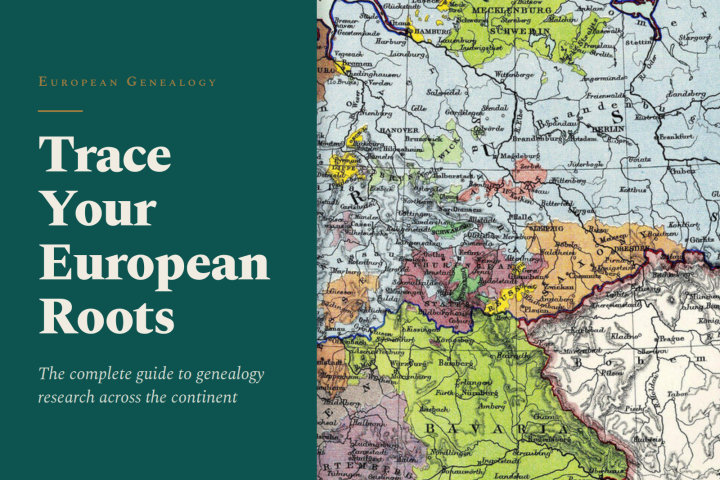
You resolve both with a historical gazetteer and a period map. For German-speaking lands, the 1912 Meyers Gazetteer lists each place with its Catholic and Protestant parishes and its civil registration district. For partition-era Poland, you must first decide whether the village fell under Prussian, Austrian, or Russian administration, because that determines which record system kept it. The deliverable is the exact parish name and the archive or portal that holds its books.
Stage 3 — Find the parish or civil register
Now you cross the ocean in the records. Depending on the country and era you’ll be reading church registers (baptisms, marriages, burials, often in Latin) or civil registration (births, marriages, deaths in the local vernacular, generally beginning in the 1800s — 1874 in Prussia, 1865 in Italy). Many of these are now digitized and free: Polish registers indexed in Geneteka, Italian stato civile on the Antenati portal, German and other registers filmed by FamilySearch.
The deliverable is the immigrant’s own baptismal or birth record — the one that confirms the parents’ names you carried from Stage 1. When those names match, you have crossed the ocean correctly.
Stage 4 — Climb generation by generation
From a confirmed baptism, the register itself becomes a ladder. The baptism names the parents; you find the parents’ marriage; the marriage names their ages or fathers; you find those baptisms; and so on, back through the same parish books, often into the 1700s. European registers reward patience because they stayed in the same church for centuries — a single parish can carry one family across eight or nine generations.
Work one event at a time. Every baptism should be confirmed by a marriage, every marriage by the baptisms it implies. The cross-checking is what keeps you on your own line instead of a same-named neighbor’s.
Stage 5 — Branch out and verify
Once the direct line is solid, widen it: siblings, godparents, witnesses. In small villages the same families intermarried and stood as sponsors for each other for generations, so a godparent in one record is often a great-aunt in another. These lateral connections both flesh out the family and catch errors — if a “sibling” turns out to have different parents, you’ve found a wall before it cost you a decade.
The four brick walls — and what they really mean
A brick wall is almost never the end of the records. It is usually a sign you skipped a stage or trusted a spelling.
- “The town name is wrong / doesn’t exist.” It’s phonetic, or it’s the district capital rather than the village, or it’s a German name for a Slavic town. Sound it out and run it through a gazetteer before giving up. This is a Stage 2 problem.
- “The records were destroyed in the war.” Sometimes true, but far less often than feared. Duplicate copies were frequently kept — civil transcripts of church books, diocesan duplicates, military and tax records. A burned town hall doesn’t always mean a burned parish.
- “There are five people with the same name.” You skipped the parents’ names from Stage 1, so you can’t tell them apart. Go back and get the verification key, then the right person is obvious.
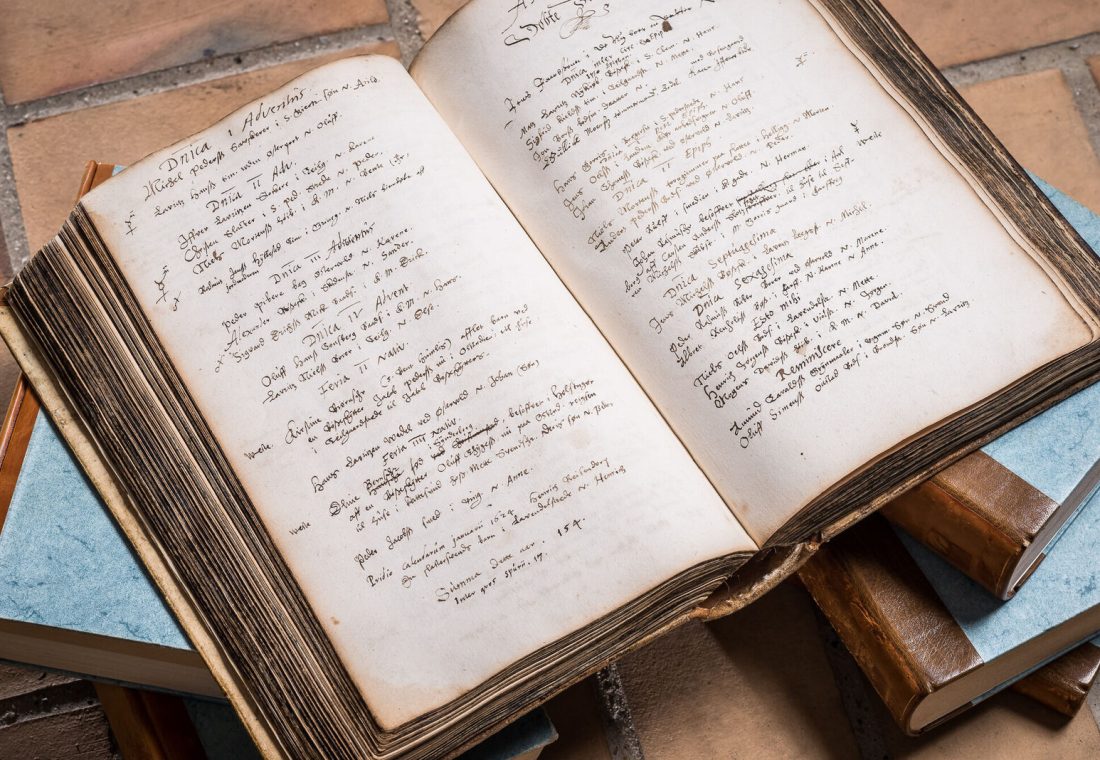
- “I can’t read the handwriting or the language.” Genealogical Latin, German Kurrent, and Cyrillic are decodable as patterns without fluency — you’re matching names, dates, and a handful of recurring words, not translating literature.
The same five stages, nine different countries
The roadmap doesn’t change from Ireland to Sweden to Italy. What changes is the vocabulary of each stage: which year civil registration began, what the records are called, which free portal holds them, and what jurisdiction the village fell under. That country-specific detail is the difference between a clean afternoon and a wasted month.
Our European Roots Field Guide eBook walks all five stages in depth, with worked examples, and the matching nine-country cheat-sheet bundle compresses each country’s archives, record names, date ranges, and gazetteers onto a single reference page per country — so when you reach Stage 3 for Poland or Stage 2 for Germany, the exact portal and the right vocabulary are already in front of you.
Start with Stage 1 today using a document you already own, and download our free Getting-Started cheat sheet to keep the five stages in order. The surname is just the doorway. The parish is five honest steps in.