The goal is a place, not a country
“My family came from Italy” or “we’re German on my mother’s side” is where most people start. It is also where most people stay stuck for years. European records were kept locally — in a parish church, a town hall, a regional archive — so to cross the ocean and find your ancestors’ baptisms, marriages, and burials, you need more than a country. You need a specific town, and ideally the parish that served it.
The good news: the document that names that town almost always already exists, sitting in an American, Canadian, or Australian record about the immigrant. You don’t start in Europe. You start at home, in records created here, and work backward until a place name appears. Here is the order that actually works.
Build the immigrant’s profile first
Before chasing a town, pin down the immigrant ancestor: full name (including the original spelling, which is rarely the spelling you grew up with), approximate birth year, and approximate arrival year. You’ll use these as a fingerprint to match records, because the name alone will betray you — a “Joseph Miller” in 1910 Pittsburgh may have arrived as “Josef Müller,” and a “John Kowalski” may have been baptized “Jan Kowalczyk.”
Collect every date and place from family knowledge, headstones, and obituaries. A death year and a cemetery are enough to order the single most useful document you can get.
The five home-country records that name the town
1. The death certificate and obituary
Counter-intuitive, but start at the end of the life. A US death certificate from roughly 1910 onward usually asks for “Birthplace” and the names of both parents (including the mother’s maiden name). The informant — often a son or daughter — sometimes wrote the actual village. Even a vague “Poland” or “Galicia” narrows the search, and the parents’ names become your verification key later. Obituaries in ethnic-community newspapers are frequently more specific than the certificate, naming the home village outright.
2. Naturalization papers (especially after September 1906)
This is the single richest US source for a birthplace. After the Bureau of Immigration standardized the process on 27 September 1906, the Declaration of Intention (“first papers”) and the Petition for Naturalization asked for the exact town and country of birth, the date and ship of arrival, and a physical description. Pre-1906 papers are thinner — often just “renounce allegiance to the Emperor of Austria” with no town — but post-1906 files routinely hand you the village on a line that literally reads “born at ___.”
3. Passenger manifests (the post-1906 ship lists)
Manifests after 1906 carry two columns that point straight to Europe: the immigrant’s last place of residence and the name and address of the nearest relative in the country whence the alien came. That relative’s address is often the home village itself. (We cover exactly which columns to read, and how to find them, in our companion guide on reading passenger manifests.)
4. The federal and state census
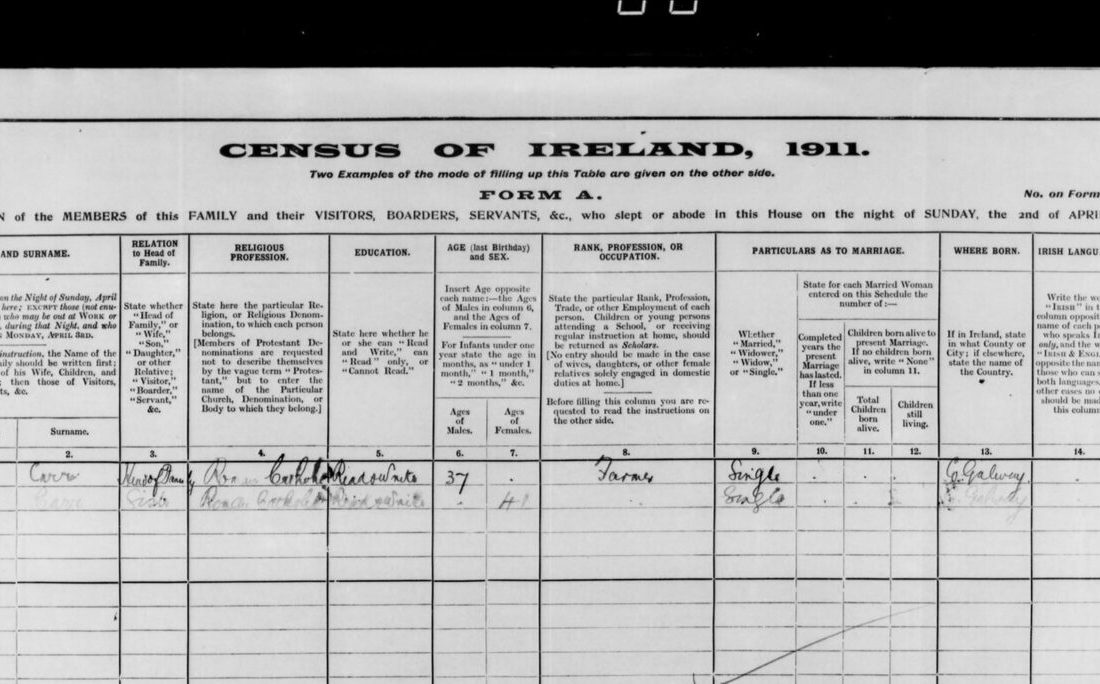
The US census won’t give you a town, but it dates the immigration and the naturalization. The 1900, 1910, 1920, and 1930 censuses asked the year of immigration and citizenship status; 1920 even asked the year of naturalization. That tells you which naturalization file and which ship year to hunt for. The 1911 Census of Canada and Australian electoral rolls and naturalization records play the same triangulating role for those countries.
5. Church and parish records on this side of the ocean
Immigrants often re-created their religious life immediately. A Catholic marriage record from a US parish frequently records each spouse’s birthplace and parents; baptismal sponsors and witnesses were usually relatives or neighbors from the same European village. Those sponsor names become powerful clues — and confirmations — once you reach the European parish books.
Convert a region into a parish
Once a place name surfaces, you face two problems: spelling and jurisdiction. The name was written by an English-speaking clerk who heard it once, so expect phonetic chaos. And the village you find may be too small to have had its own church — baptisms might have been recorded in the parish two villages over.
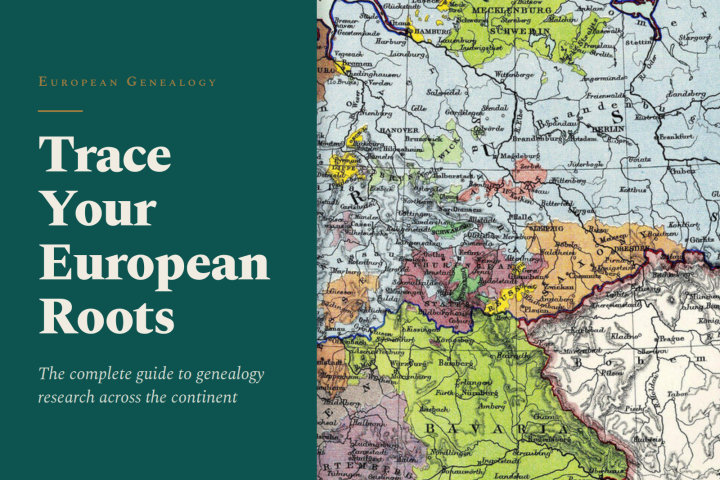
This is where a historical gazetteer earns its keep. For German-speaking areas, Meyers Orts- und Verkehrs-Lexikon des Deutschen Reichs (the “Meyers Gazetteer,” 1912 edition) lists tens of thousands of places with the Catholic and Protestant parish each belonged to, plus the civil registration office. For Poland and the former partitions, the boundaries shifted constantly — what was “Russia” or “Austria” on a manifest may sit in modern Poland or Ukraine — so a map of the period matters as much as the name.
A “town” on an American document is a starting hypothesis, not an answer. Confirm it by matching the parents’ names and approximate birth year against the European parish register before you trust it.
Worked example: from a Pittsburgh death certificate to a Galician parish
Say a 1931 Pennsylvania death certificate gives “Mary Wojcik, born Austria 1868, parents Jan Wojcik and Katarzyna.” The 1920 census says she immigrated in 1889 and naturalized through her husband. Her 1912 US Catholic marriage record names her birthplace as “Tarnow.” The 1889 manifest’s “last residence” column reads “Zalasowa.” A gazetteer shows Zalasowa was a village in the Tarnów district of Austrian Galicia, served by its own Roman Catholic parish. You now request the parish baptismal register for 1868 — and look for a Maria, daughter of Jan and Katarzyna Wójcik. The parents’ names, carried all the way from the death certificate, are what tell you it’s the right Maria.
Match the method to the country
Every country hands you a different “next door” once you have the parish: German civil registration after 1874, Polish parish books indexed in Geneteka, Italian stato civile in the Antenati portal, Irish Catholic registers, Scandinavian household examination rolls. The framework above is universal; the specific archives and record types are not.
That country-by-country detail is exactly what our European Roots Field Guide eBook walks through, with the real record names and date ranges you’ll be searching. And for the heavy lifters — Germany, Poland, and Italy among them — the matching country cheat-sheet bundle gives you the gazetteers, portals, and record vocabulary on a single page you can keep open while you work.
Start with one document you already have access to — that death certificate or naturalization file — and grab our free Getting-Started cheat sheet to map out your first three steps. The town is closer than it looks; it’s usually hiding in a record you’ve already half-read.