The records are online, free, and held by the people who made them
There is a persistent myth that European genealogy means paying a subscription site or hiring a researcher in the old country. For most of the records that matter — the baptisms, marriages, civil births, and land valuations that build a tree — that simply isn’t true anymore. National archives and volunteer indexing projects have put millions of images and indexes online for free. The trick is knowing which portal each country uses, because there is no single front door. Here is where the records actually live, country by country.
Germany — Meyers Gazetteer, then the regional archives
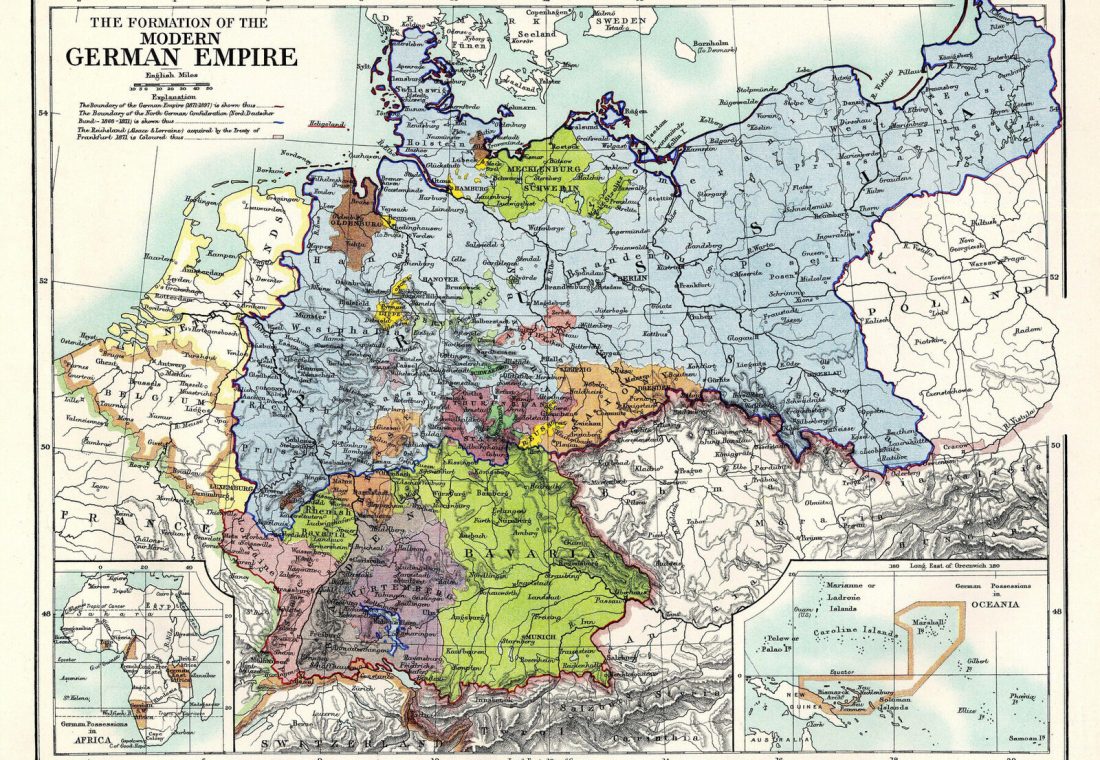
Germany has no single national records portal, because civil registration was run locally — so your first stop isn’t a record site at all, it’s a finding aid. Meyers Gazetteer (meyersgaz.org) digitizes the 1912 Meyers Orts- und Verkehrs-Lexikon and tells you, for any place name, which Catholic and Protestant parish kept the church books and which civil registration office (Standesamt) recorded the births after 1874. From there, the church books themselves are increasingly on Archion (Protestant) and Matricula (Catholic, and free), with civil records held by regional state archives. Identify the place in Meyers first; everything else follows from the jurisdiction it names.
Poland — Geneteka and the partition portals
Poland’s standout free resource is Geneteka (geneteka.genealodzy.pl), a volunteer-built index of births, marriages, and deaths from parish and civil registers, searchable by surname and province, often linking straight to the scanned image. Because Poland was partitioned, the underlying images sit in several systems: szukajwarchiwach.gov.pl (the State Archives’ scan portal), metryki.genealodzy.pl, and AGAD for the former Austrian and Russian areas. Search Geneteka by surname and region to find the index entry, then follow it to the image. Remember the records may be in Polish, Latin, or — after 1868 in the Russian partition — Russian Cyrillic.
Italy — Antenati, the national civil-records portal
Italy is one of the easiest countries to research for free thanks to Antenati (antenati.cultura.gov.it), the official portal of the State Archives that hosts the digitized stato civile — civil birth, marriage, and death records. Civil registration began across most of unified Italy in 1866 (earlier in the south under Napoleonic rule, from around 1809), and the records are remarkably detailed: birth acts name parents, ages, and occupations. Browse by province and comune; the images are free and the coverage is deep.
Ireland — three free national pillars
Ireland punches far above its weight for free access, because the loss of the 1922 Public Record Office fire forced reliance on substitutes that are now all online:
- The 1901 and 1911 censuses at the National Archives of Ireland (census.nationalarchives.ie) — fully free, naming every household member, religion, and place.
- Catholic parish registers at registers.nli.ie, the National Library of Ireland’s free digitized microfilms of baptisms and marriages, mostly up to the 1880s.
- Griffith’s Valuation (1847–1864) at askaboutireland.ie — a property survey that functions as a census substitute, naming the occupier of every holding and the landlord, parish by parish.
Civil registration indexes (and many images) are free at irishgenealogy.ie: civil records of marriages and deaths from 1864, and non-Catholic marriages from 1845.
Scotland — ScotlandsPeople (the honest exception)
Scotland is the outlier. ScotlandsPeople (scotlandspeople.gov.uk) is the official government archive and the only authoritative source — searching the indexes is free, but viewing a record image costs credits. It’s not subscription-free, but it is the genuine national archive, with statutory births, marriages, and deaths from 1855, old parish registers back to the 1500s, and the full census. We flag it honestly: budget a few pounds for images rather than expecting fully free access.
Scandinavia — the household examination rolls
The Nordic countries kept extraordinary records, and most are free:
- Sweden: the husförhörslängd (household examination rolls) are the crown jewel — the parish clerk recorded every resident household by household, tracking moves, literacy, and life events across decades. They’re at the Riksarkivet (riksarkivet.se), with much free access; church books are also on the Riksarkivet’s SVAR system.
- Denmark: the Rigsarkivet (sa.dk) hosts free scanned church books (kirkebøger) and the census (folketælling).
- Norway: the Digitalarkivet (digitalarkivet.no) is one of the best free archives anywhere — searchable transcribed censuses and scanned church books.
The Netherlands — WieWasWie
For Dutch ancestry, WieWasWie (wiewaswie.nl) aggregates indexes from regional archives — civil registration (from 1811), church records, and population registers — and links to the holding archive’s scans. The free search covers the core civil records that begin under Napoleonic administration, which makes the early 1800s unusually well documented.
There is no single European archive. There are roughly a dozen national portals, each with its own login, language, and date ranges. Knowing which one holds your village is most of the battle.
The universal free layer: FamilySearch
Across every country above, FamilySearch (familysearch.org) is the free backbone. It hosts an enormous catalog of microfilmed and digitized European registers — often the same images the national portals hold, sometimes ones they don’t — and a free (if patchy) index. When a national portal stalls, search the FamilySearch catalog by place name; the films are frequently there, viewable free with a registered account.
One reference page per country
Keeping all of this straight — which portal, which years, which language, which gazetteer — is exactly why we built the cheat sheets. Each of our country guides puts the live free portals, the record date ranges, and the search vocabulary for that country on a single page. Start with the one that matches your line: the Germany, Poland, Italy, Ireland, Scotland, Sweden, Denmark, Norway, and Netherlands sheets — or take the lot in the nine-country bundle if your tree crosses borders.
Not sure where your line leads yet? Download our free Getting-Started cheat sheet, which maps the first portal to try for each country, and start with the one archive that holds your ancestor’s parish. The records are already online and already free — they’re just hiding behind nine different front doors.